

AI Fluency Without AI Literacy Is a Governance Problem Waiting to Happen
Mario Martins argues that enterprise AI adoption is moving faster than the access controls, data practices, and governance models needed to manage it safely.
Risk, compliance, and governance for enterprise AI and data systems.
Mario Martins argues that enterprise AI adoption is moving faster than the access controls, data practices, and governance models needed to manage it safely.

Gopichand Mannava, Chief Data Architect for the State of Connecticut, details the moment governance must move beyond model outputs to delegated authority, deterministic controls, and accountable ownership.

Vladimir Filkov, Professor of Computer Science at UC Davis, explains why AI governance depends on an organization's ability to edit the software its records pass through.

Matt Erman, Senior Software Engineer at Blackboard and author of "Grokking Software Architecture," explains why AI-generated code creates liability faster than teams can review it.

Anudeep Reddy Puthalapattu, Senior AI Data Engineer at HCL America, explains why financial institutions need governance, lineage, and business context embedded in the data platform as AI becomes a new consumer of enterprise data.

Sandra Luksic, Associate in AI Governance at Booz Allen Hamilton, argues that automated compliance reporting is severing risk management from the people it is meant to protect, creating a dangerous illusion of safety.

Danny Z., a senior security engineer, explains why narrow, single-purpose AI agents outperform general-purpose ones in detection and response, and why organizations need agentic workflows of their own to keep pace with AI-assisted attackers.

Jimi Du, Senior Corporate Counsel at Lead, discusses the limitations of human-led models and how strategic human-in-the-loop management of AI workflows is the future of compliance.

As agent sprawl outpaces governance, Amitabh Ranjan Sharan, Consulting Director at DHL IT Services, explains why the agent control plane is the missing layer in agentic AI architecture.

Elena Garvin, AI Governance and Regulatory Analyst and Regional Ambassador at Women in CyberSecurity Florida, urges GRC teams to build automated, executable controls before regulators force the shift.

Akshata Udiavar, Partner and Head of Banking and Capital Markets at EY Studio+, explains why AI governance fails when it lives in static policies and succeeds when it is built directly into how teams design, build, and deploy AI systems.

Fadi Daou, Executive Director of Globethics, explains why global AI governance has stalled and how scientists and civil society are stepping in to fill the leadership void.

Siva Puvvada, an Independent AI Governance Consultant, explains why a new operational framework is needed to manage AI, ensure compliance, and build lasting accountability for enterprises.

Ayoola Lawal, Managing Partner of LRA Consulting, explains how human factor engineering provides the framework for mitigating risk and achieving sustainable speed.

Farzia Khan, an award-winning Cybersecurity leader, argues that rigid hiring practices, credential fixation, and a lack of real sponsorship are the actual barriers blocking qualified candidates from entering cybersecurity.

A new survey reveals medical staff are widely using unapproved AI tools, creating significant patient safety and data privacy risks.

Agentic AI amplifies existing security flaws at machine speed. Aaron Mansfield, Identity Security Leader at Mansfield Advisory Services, explains why organizations must master identity management and system configuration fundamentals before racing toward AI adoption.

Jon Knisley, Global Process AI Lead at ABBYY, discusses how operational AI governance and cross-functional accountability drive ROI, reduce risk, and build trust in enterprise AI.

Sai Santhosh Goud Bandari, Senior Engineer at MetLife, maps a three-layer framework for AI implementation that transforms governance from a compliance checkbox into a competitive advantage.

Christopher Day, Director of Data and AI Governance, ties AI returns to workforce literacy, embedded governance, and trust built into every use case.

Dr. Vasiliki Koniakou, Intellectual Property Manager at the Athens Center for Entrepreneurship and Innovation, says that startups that integrate regulatory foresight early gain clarity, boost investor confidence, and turn legal obligations into business opportunities.

Stephen Karam, Partner at Levio, reframes the digital sovereignty debate from one about owning physical data centers to being first in innovation and managing the true "digital sovereignty stack".

Chris Notaro, CEO of Untangle Health, offers healthcare leaders a framework for getting a handle on shadow AI, vetting technology vendors, and regaining control of the innovation roadmap.

Farhan Sahito, PhD, Partner at Privanova and advisor to the European Commission, UN, and INTERPOL, argues AI security success hinges on impact based autonomy and firm executive control.

Shannon Murphy, Sr. Manager of Global Security and Risk Strategy at Trend Micro, breaks down how AI forces CISOs to manage not just threats, but trust, accountability, and real-world harm.
Juniper Networks' CISO Drew Simonis explains why a new partnership model is already offering security leaders a more sustainable path to success.

Armel Roméo Kouassi, Senior Vice President at Northern Trust, frames AI’s move into daily life as a turning point where accountability and validation matter more than speed as autonomy grows.

Deep Mendiratta, Chartered Accountant and Risk Management Professional in India, says AI adoption is exposing long-standing gaps in governance and security maturity.

Russell Parrott, an independent AI Governance Analyst, argues that the real challenge of AI in enterprise workflows is cultural, not technological, and that true accountability requires humans to be able to intervene with evidence-based, verifiable oversight.

Nicholas Currie, Principal Consultant at Beyond Blue, reveals common pitfalls organizations face when building cyber resilience and shares practical guidance for creating a qualitative, evidence-based strategy.

AI Governance and Responsible AI Strategist Horatio Morgan outlines why interoperability, not new frameworks, determines whether enterprise AI governance works at scale.

Jeff Mahony, Co-Founder and Chief Architect of RYTchain, warns that AI’s speed is outpacing oversight and urges enterprises to rebuild security architectures that restore accountability.
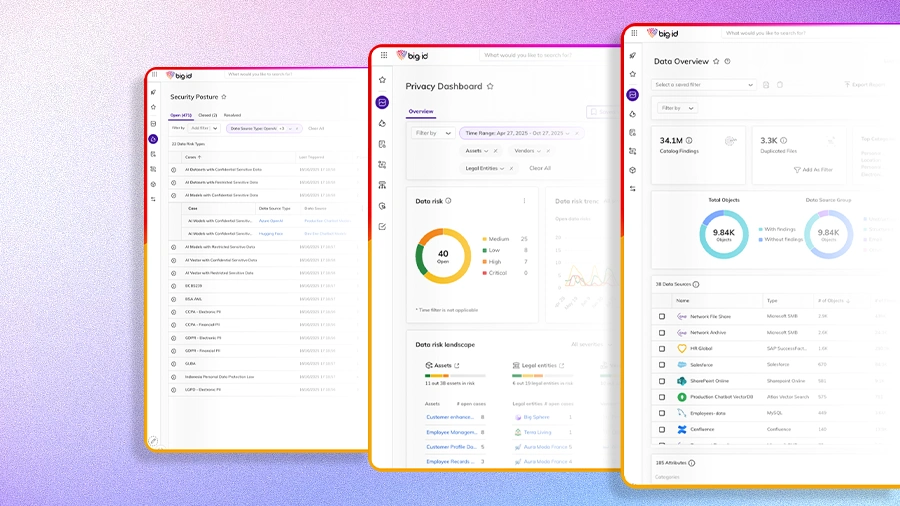
Stephen Gatchell, VP of Data & AI Strategy at BigID, explains how enterprises can fix compliance chaos and accelerate AI innovation with existing data governance automation tools.

Wesley Belleman, Operations Manager for the California Air National Guard, explains how a military-inspired framework can help leaders move from blame to reslience.

Son-U Michael Paik, AI governance architect and NY attorney, explains why a unified framework and human expertise are essential for managing global AI risk.

Shivam Shukla, a data and AI governance specialist at a global trade and logistics company, explains why data accountability is the key to responsible and effective AI.
Chaitanya Addagalla, a Technology Risk Manager at a leading global consulting firm, explains how to reframe AI explainability from a compliance task into a competitive advantage. Learn his blueprint for building measurable trust in AI systems.

Rebecca Evans, Director of Product Marketing at OneTrust, explains why new data regulations and rapid AI adoption make traditional governance models ineffective.

Tatyana Mamut, Co-Founder and CEO of Wayfound, explains why AI agents are creating a dangerous blind spot for enterprise leaders and how Guardian Agents can help.

Eric Hu, Investor at Thoma Bravo, explains why successful AI adoption is a challenge of strategy, culture, and education, not technology.

Yotam Perkal, Senior Manager of Threat Research at Avalor Security, explains why AI models designed to produce functional, not secure, code are creating a vicious cycle of AI-driven vulnerability and exploitation.

Emily Ryder Martins, CDAO at St John of God Health Care, explains how "reverse prompting," or training AI to ask questions, can inspire critical thinking in healthcare.

Manish Jain, VP of AI Architecture at Firstsource, describes how OpenAI's GPT-OSS model is narrowing the performance gap with closed-source systems.

Khullani Abdullahi, J.D., founder of Techné AI, on why the prerequisite for AI compliance isn't control, but a shared culture of AI literacy.

Chris Pace, VP of Healthcare Industry at SearchStax, on the healthcare industry's transition from AI hype to a disciplined approach.

India's new AI bill uniquely targets deepfakes and workers' rights. Nikhil Solanki, Data Protection Officer at LuLu Group International, on how India's AI regulations could set a new global standard for AI governance.
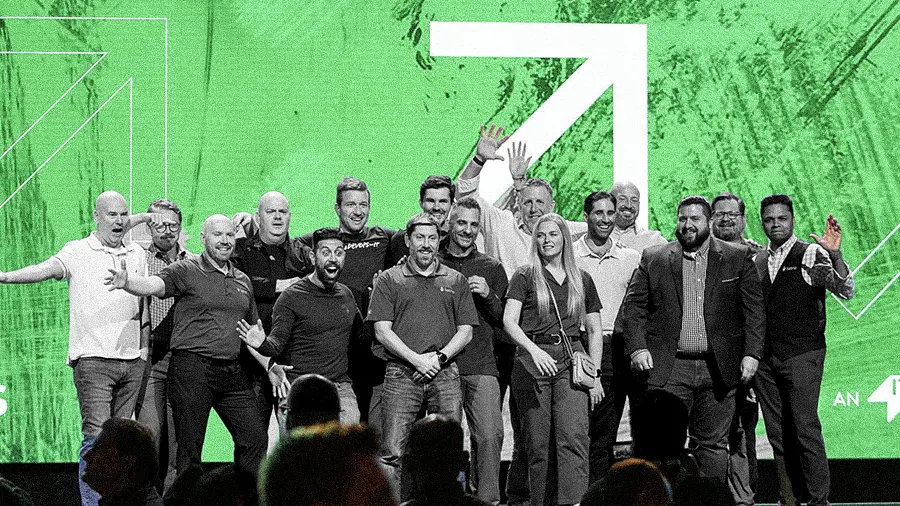
Robert Kelly, VP of Innovation at Liatrio, discusses how to manage a workforce of specialized AI agents by codifying policy and overcoming cultural inertia within organizations.

Dr. Dimitrios Kalogeropoulos, CEO of the Global Health & Digital Innovation Foundation, on why healthcare's innovation is broken by silos.
Yotam Perkal of Avalor Security, a Zscaler Company, on "vibe coding" security flaws and overcoming AI risk.

Alicia Staley, Chief Patient Officer at Medidata, argues that the industry must embed the patient perspective into its AI strategy from the start.

Arun Asok Kumar, Director of Cloud Infrastructure at precision MDR provider Deepwatch, on how agentic AI is liberating engineers.