
For any information coming from AI, there should be a process of validating it. Search for bias, use non-AI references to check the information, and know who developed the tool. It's critical to verify anything coming from AI.
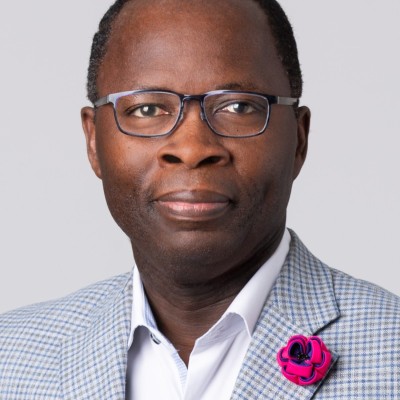 Armel Roméo KouassiSVP, Global Head of Asset Liability Management @ Northern Trust Corporation
Artificial intelligence is now a fixture of daily life, influencing how people shop, budget, and make decisions. As its presence normalizes, the conversation moves beyond simple excitement versus fear and toward something more nuanced: how to trust AI responsibly while remaining accountable for its outputs. Retailers are deploying AI agents to guide shopping experiences, while personalization continues to expand across service industries. Yet many Americans find the pace of adoption unsettling, introducing a new tension around trust, control, and responsibility.
Armel Roméo Kouassi brings more than two decades of experience navigating risk, scale, and decision-making at the highest levels of banking, wealth management, and fintech. As Senior Vice President and Global Head of Asset Liability Management at Northern Trust Corporation, he operates at the intersection of strategy and accountability for some of the world’s largest financial institutions. A Presidential Leadership Scholar and recognized thought leader, Kouassi frames the AI moment not as a technical challenge, but as a test of mindset, one grounded in ownership and personal responsibility.
"When you use AI, you have to understand that you are still responsible for the information and the decision," Kouassi says. "AI is augmenting the way we operate, and human supervision becomes really critical as autonomy increases. You have to adopt the mindset of having a certain level of ownership." For Kouassi, trust in AI is a learned discipline. He notes that a key path to responsible use lies in establishing personal guardrails for verification.
All about validation: In his view, that discipline means adopting a responsible AI framework for evaluating AI-generated outputs before accepting them, calling for greater scrutiny from users. "My advice is validation, validation, validation. For any information coming from AI, there should be a process of validating it. Search for bias, use non-AI references to check the information, and know who developed the tool. It's critical to verify anything coming from AI."
Proof in the portfolio: Kouassi points out that certain high-stakes industries have been using automated decision-making for years. "In finance, if you consider algorithms a predecessor to AI, people have relied on machines for years to make decisions about how they allocate their money. On a trading desk or in portfolio management, the return is what mattered. The use of algorithmic optimization has already demonstrated the power of unbiased, more disciplined decision-making to generate returns, so that proof has already been demonstrated," he explains. That history contextualizes the current wave of adoption, where, as Kouassi notes, different generations are accepting automation at different paces.
Kouassi sees the pace of change accelerating exponentially, including in high-stakes decisions tied to capital and risk. In finance, where trust breaks fastest once money can move without human sign-off, the shift from incremental augmentation toward full automation dramatically raises the bar for oversight.
Approaching autonomy: That transition, he suggests, will force organizations to create new structures dedicated to supervising and coordinating AI agents before trust can extend from advice to execution. "AI is moving beyond simple augmentation toward real autonomy. That shift, from support to full automation, will force organizations to create entirely new functions responsible for supervising, coordinating, and governing AI agents to ensure the work actually holds together."
Holding humanity: For Kouassi, this moment isn’t a warning so much as a clarifier. Staying relevant means leaning into the qualities machines can’t replicate, even as AI governance and adoption move at different speeds across organizations and regions. "We have to hold on to our humanity to ensure we won’t get replaced. The behaviors that make us better than a machine, like emotional intelligence, critical thinking, and strategic thinking, are things a machine certainly will not replace."
The Magnificent Seven: The debate over risk is already settled, he continues, pointing to market trends that, in his analysis, suggest a collective bet on AI has already been made. This reality, he suggests, highlights the need for governance. "When people put their money into the Magnificent Seven, companies like Google, Microsoft, and NVIDIA, they are directly stating a belief in AI, because those are the companies driving this transformation. It's already part of our belief system that this is the direction we're going."
For Kouassi, AI is not a distant horizon but an immediate reality, one that rewards urgency and punishes complacency. He likens the moment to the arrival of the World Wide Web, multiplied in scale and speed, with consequences that now extend beyond business into cybersecurity and geopolitics. As responsibility rises alongside capability, the margin for delay disappears. "We have to think fast about what guardrails we need to implement or adopt," Kouassi concludes. "We have to think ahead about the guardrails we need for human-machine interaction, cybersecurity, and privacy. It’s not time to wait. The transformation is happening everywhere."