
The question is not why change. It's when. Technology moves so fast that what you purchased one or two years ago is already legacy.
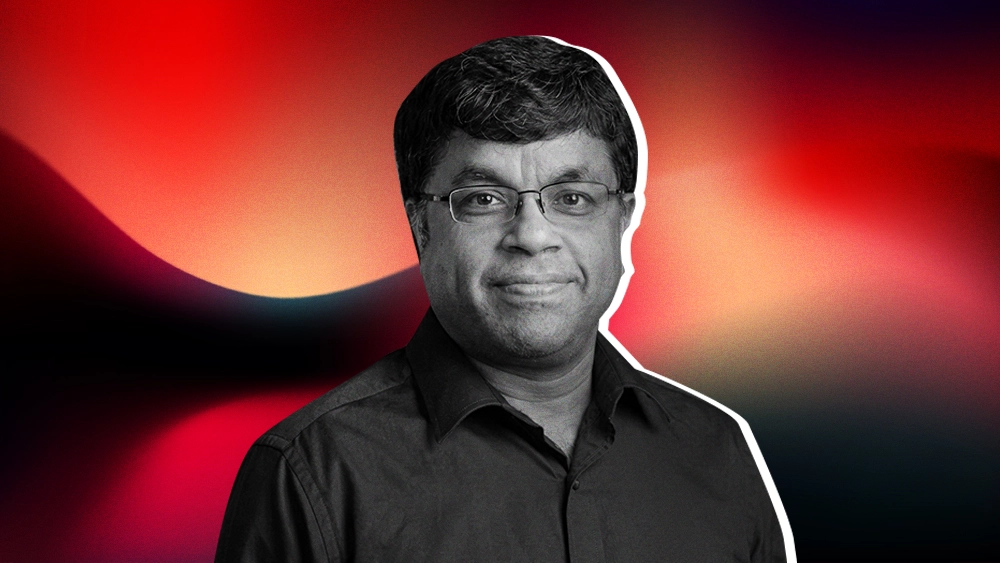
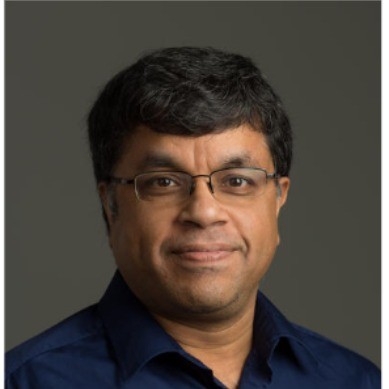 E.G. NadhanChief Quantum Ambassador @ QuantaCyber @ Board Chair @The HDF Group
The pace of enterprise technology change has crossed a threshold where modernization can no longer be treated as a destination. Investments made just a year or two ago are already becoming legacy, and AI is compressing that timeline even further. For leaders still planning transformation in discrete phases, the window to act is shrinking faster than most realize.
E.G. Nadhan, Chief Quantum Ambassador at QuantaCyber, brings more than 25 years of experience advising global enterprises on digital transformation, open platforms, and emerging technology strategy. With a career spanning EDS, HP Enterprise Services, and over a decade in Red Hat's CTO organization, he now works directly with executive leadership to drive modernization across financial services, healthcare, energy, and telecommunications. His view is that the industry's biggest failures are rarely technical.
"The question is not why change. It's when. Technology moves so fast that what you purchased one or two years ago is already legacy. Enterprises that wait until something breaks don't avoid disruption. They just postpone it until it's more painful." Nadhan frames AI as a trigger for deeper architectural and organizational questions. Where cloud forced enterprises to clean house, prioritize workloads, and decommission unused systems, AI forces them to reconsider what work humans should do and how the underlying data supports it. Feed AI wrong data, he says, and you multiply the problem at an order of magnitude a human never could.
Mindset over mainframes: When Anthropic recently claimed Claude can transform COBOL, the announcement moved IBM's stock price and generated broad industry debate. Nadhan respects what Claude can do but pushes back on the framing. "The technology to transform COBOL has already been in place. IBM has had it for years," he says. "The reason mainframes still exist is the computing power they provide. The FAA runs flight route algorithms on mainframe computers. It takes a lot to emulate what that stack delivers." The real barrier, he argues, is not the language. It is whether the people and teams on the other side of modernization are structured to collaborate in a containerized, distributed environment. "If the culture is 'my way or your way,' that mindset is detrimental. We got away with it in the monolithic world. Not anymore."
Employee buy-in: Even technically sound transformation plans fail without workforce alignment. "You come up with all these ideas, the project plan is in place, you execute, maybe get to pre-production, and then you start seeing resistance," Nadhan says. "Then there needs to be a reset. The employees who are going to live in the new environment are the prime customers of the transformation. Getting their buy-in is where enterprises fail."
On architecture, Nadhan advocates for open platforms and standardization with freedom of choice, a principle he applies across every layer of the stack, from operating systems and container platforms to automation and AI model deployment.
Peers, not classmates: "Saying all workloads should run on one single stack is like saying all high school kids should go to the same college," Nadhan says. "The top college may not be the best fit for every student. Workloads need to land in the right environments. Enterprises need to standardize on an optimal combination of platforms, not a single one, and have the ability to move workloads between them."
Right-size the model: On AI specifically, Nadhan sees enterprises overspending on GPU access and defaulting to large language models when smaller, domain-specific alternatives would perform better at lower cost. "Not every AI use case needs that type of horsepower," he says. "You are better off working with smaller models that are more pertinent to the domain of your enterprise, trained on your own curated data. That brings down cost and complexity. What's out in the public is more like 'let's see what's possible.' When you go to production, I see enterprises doing it with SLMs on domain-specific data."
Governance, Nadhan says, must be federated and representative. IT, business, security, and finance all need seats at the table. "AI adoption should be an enterprise-wide decision, not each team making its own. And if the culture is that the loudest voice wins, I don't see a good outcome."
The risks extend beyond architecture. Nadhan closes with a warning about post-quantum security. Adversaries are harvesting encrypted data today with plans to decrypt it once quantum computing matures enough to break current algorithms. "We have this perception of being secure," he says. "But quantum can do the factorization used for passwords much, much faster. It's the job of enterprises today to encrypt with quantum-safe algorithms. Otherwise, they are exposing themselves in a very big way."
"Standardization does not mean one platform for everything. It means creating an optimal combination of environments so workloads can run and move where they deliver the most value," he concludes. "Without that freedom of choice, you haven't modernized. You've just relocated your constraints."