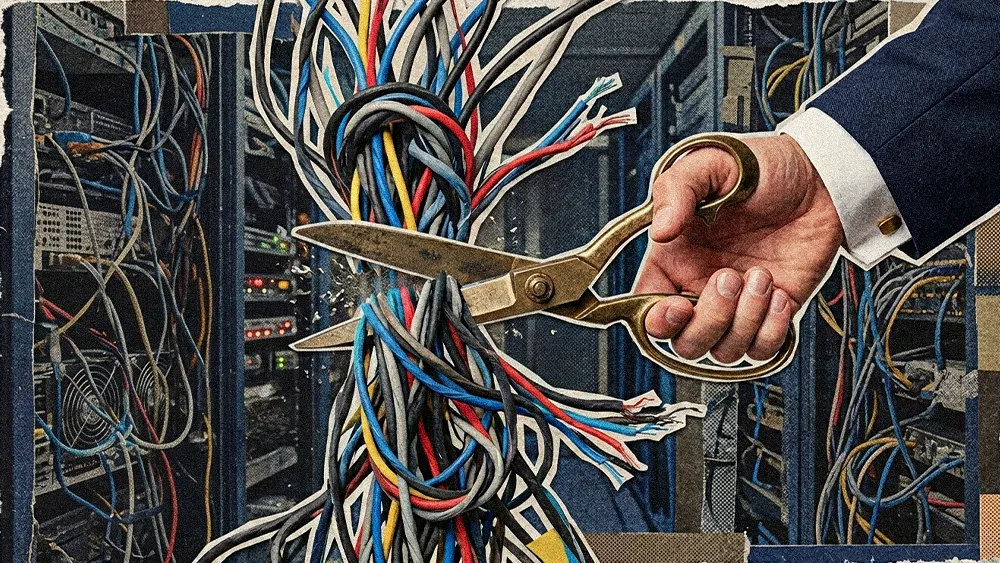
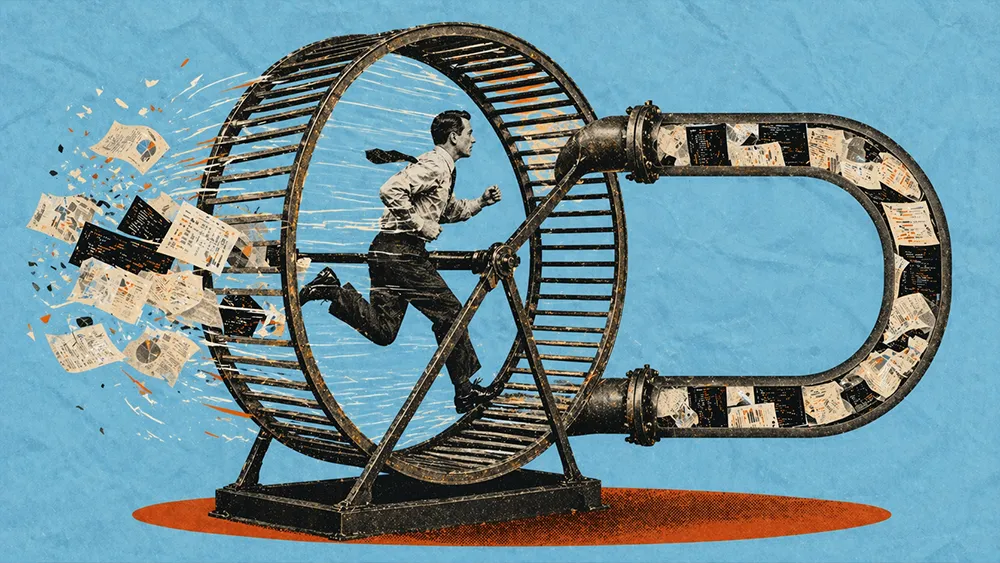
Monitoring systems across healthcare, infrastructure, and enterprise AI generate alerts faster than operators can process them, and the alerts that matter most get buried in noise. But the underlying problem is not volume. It is that most systems still run on rudimentary data collection models that send raw, unprocessed signals directly to whoever is watching, with no prioritization, no baseline awareness, and no mechanism to distinguish an emergency from a sensor malfunction.
Dr. Aswini Misro, NHS England Clinical Entrepreneur and founder of YouDiagnose, is a surgeon, clinical AI researcher, and fellow in the NVIDIA Inception program. YouDiagnose builds AI-enabled clinical decision-making tools that automate history taking, diagnostic workup, and multidisciplinary triage to reduce physician burden and improve patient safety. Dr. Misro has authored work on reducing diagnostic errors in overstretched healthcare systems and currently builds layered agent architectures that filter monitoring signals before they reach human operators.
"The issue is not being able to filter through the noise to reach the right signal. It is basically working on a very rudimentary model of data collection. There is no data processing. It's an unfiltered signal going to whoever is monitoring, and that leads to a massive amount of alert fatigue," says Dr. Misro.
A flat line that means nothing
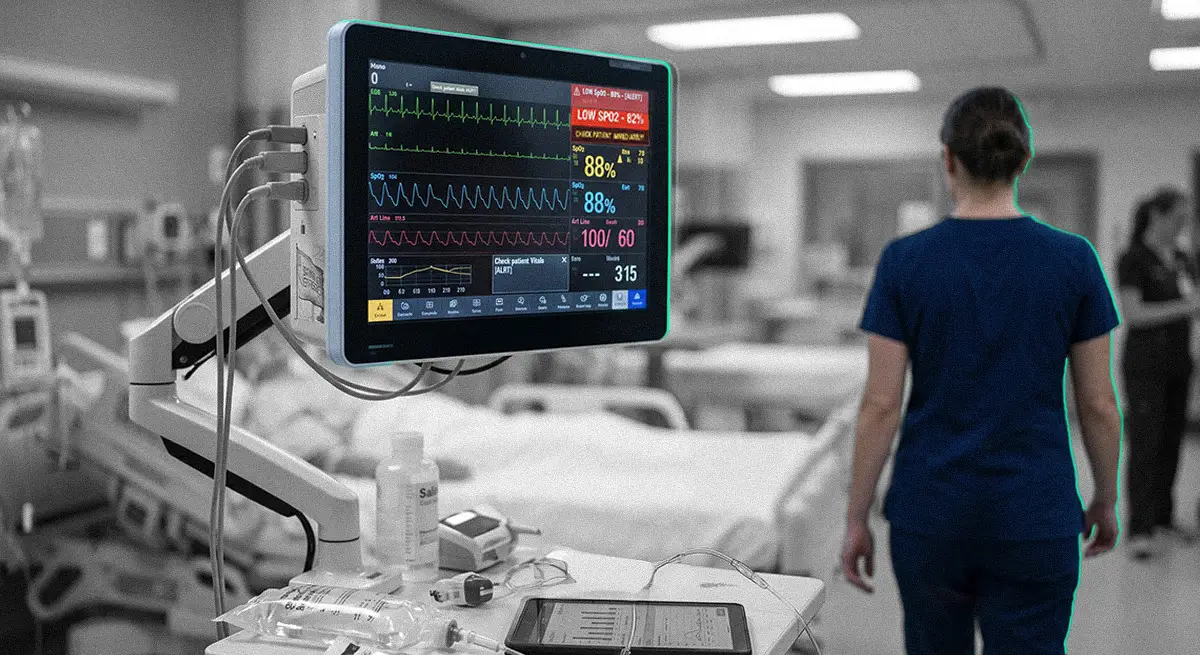
Dr. Misro illustrates the problem with post-operative patient monitoring. A patient wakes up at night with pain, and all the sensors fire. Or a pulse oximeter slips off a finger, and the heart-line tracing drops to a flat line. The patient is not dead. The sensor loses contact.
"The system is not trained to think that there is a possibility of this," Dr. Misro says. "With a fixed span of attention, that attention goes to the area that does not deserve any. Somebody who is deteriorating and cannot speak up, the help reaches there at the very end, when it is too late."
The consequences extend beyond the clinical. Poor signal design erodes confidence in remote monitoring entirely. Clinicians keep patients in hospital beds rather than trusting home monitoring, while patients who need those beds wait in corridors. "That defeats the very purpose of doing remote monitoring, which is why the confidence of the industry is at an all-time low."
A constellation of agents
Dr. Misro argues that AI can solve the signal quality problem, but only when systems are designed around personalized baselines and layered processing. A 32-year-old athlete and a post-surgical patient on home oxygen have radically different circulatory baselines. Without hyper-personalized thresholds, any monitoring system generates false positives for one and misses real deterioration in the other.
His team builds what he calls a "constellation of agents," a multi-agent architecture where each agent handles a specific function and performs root-cause analysis before escalating to a human. "Instead of escalating straight to a human and draining their resources, we do a thought process through the agents to understand why this has happened. Because we have established the baseline, it is very easy for the agent to resolve these issues." The result is a dashboard where operators see only signals that survive multiple layers of validation.
But more context is not always better. Dr. Misro finds that hyper-contextualization creates processing bottlenecks that force operators into queues. His solution is a hybrid architecture combining on-premises processing with scalable cloud backup to absorb spikes.
Human-led, not autonomous
Dr. Misro is direct about where autonomy ends. Polished AI outputs can undermine human judgment when they present conclusions with high confidence that do not reflect ground truth. "Human operators are often taken aback, thinking maybe they are wrong and the AI is right. They fall into the trap of assertions presented as facts but differing from the ground truth."
His team develops training programs that teach clinicians to scrutinize, challenge, and override AI outputs. Override patterns feed back into the system to identify failures. "Whenever a clinician overrides the system, that's a good thing for us. By looking at the override patterns, we can know where we are making mistakes."
From systems to culture
Dr. Misro says the shift requires more than architecture. It requires an organizational culture that embraces lean experimentation rather than fear. His team models the workforce impact of AI adoption and finds that while 78 positions are displaced from a baseline of 680, 176 new roles are created. "The fear-mongering was associated with this loss of 78 positions. But the same weight was never given to new job creation." The real shift is end-to-end.
"Unless we have good ground truth data and trained human beings behind the system, even the best architecture will fail. It is an end-to-end process improvement, a design principle applied to the entire process, not just architecture." AI only works when the whole system changes with it.
The views and opinions expressed are those of Dr. Aswini Misro and do not represent the official policy or position of any organization.