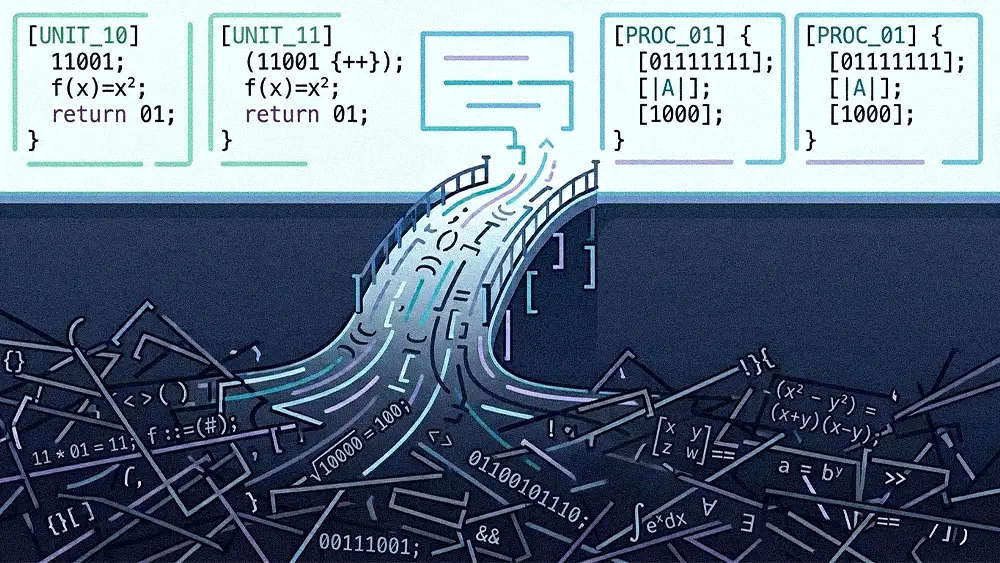

Weight quantization is a representation problem, while KV cache optimization is a systems problem. The feedback loop is runtime behavior under production load, not an offline benchmark.
 Vamshi NagireddySenior Software Engineer @ Intel Corporation
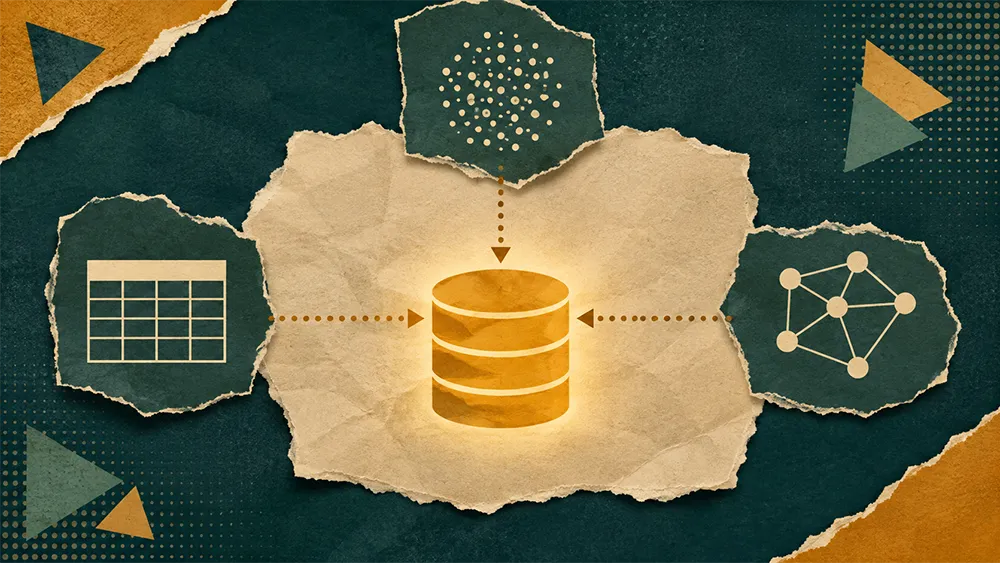
On large-context production stacks, 60 to 70 percent of inference compute now disappears into the prefill phase alone, recomputing the same system prompts, few-shot examples, and retrieval chunks on every request. The trigger is context length. Prefill cost holds steady at 4K tokens, then stops scaling linearly and starts dominating the bill as windows stretch to 128K. Adding GPUs does nothing to fix the underlying waste, since the problem is where data lives and how often it moves, which is why engineering teams have started treating the KV cache as a data management problem rather than a model-tuning exercise.
Vamshi Nagireddy is a Senior Software Engineer at Intel Corporation, where he specializes in AI and machine learning workload optimization and brings more than four years of infrastructure design experience to the problem. His track record includes a 25 percent performance improvement in Intel's driver software through advanced prefetcher tuning, production-scale NLP pipelines, and published technical deep-dives on GPU hardware fundamentals and inference architecture. His central argument is that the traditional machine learning mindset falls short for today's real-time memory challenges, since faster compute forces the software stack to adopt the disciplines data engineers have relied on for decades.
"Weight quantization is a representation problem, while KV cache optimization is a systems problem. The feedback loop is runtime behavior under production load, not an offline benchmark," says Nagireddy. That distinction sits at the center of where inference infrastructure is heading, because the two problems demand entirely different engineering instincts, and the discipline the harder one demands looks a lot like database management.
The wall at the end of model optimization
The push toward new solutions comes from the maturity of the old ones, since transformer variants are now highly refined and attention optimizations like FlashAttention sit inside most frontier models already. Kernel-level improvements now demand enormous effort for single-digit gains, which sends teams toward newer architectures or accessible wins like static prefix caching. The trouble starts when they try to force static, offline model hacks into a live production environment, and the friction becomes obvious the moment engineers attempt to quantize the KV cache itself.
Weight quantization relies on a stable distribution built for offline calibration, while KV cache activations drift as context grows and stay highly input-dependent. Nagireddy advises keeping quantization and cache optimization as separate work streams, then deploying online-aware approaches right where the two intersect. The software bottleneck ties directly into a hardware mismatch, since the industry keeps pouring money into interconnect bandwidth, memory capacity, and pooling while the compute ceiling rises faster than the memory bandwidth ceiling underneath it.
"Weight quantization is a one-time cost you pay during deployment. You can afford to be careful because the feedback loop is slow but manageable," Nagireddy explains. "KV cache optimization requires you to think like a systems engineer when it comes to eviction policies, memory tiers on the processor, and concurrency. The feedback loop is runtime behavior under load, not offline benchmark numbers."
Data movement becomes the target
With model optimization hitting a wall, the next leap in efficiency moves to data movement, where the frontier for production inference stacks lies in how systems shuffle activations between memory tiers, manage host-to-device transfers, and handle multi-node communication patterns. Peak bandwidth is a spec sheet number, and Nagireddy notes that live workloads rarely come close to it, the same distance database administrators have spent decades closing between what a disk can deliver and what a query actually sees.
Agentic and multi-turn workloads make the wasted compute considerably worse, because as autonomous loops enter production, the volume of redundant context creation generates a steeply compounding cost. Real agent traffic already reads from cache roughly twelve times for every write, which is a classic read-heavy access pattern, and an agent running a twenty-step reasoning loop frequently rebuilds its core context on every pass. Teams that persist the KV cache state across turns change their operational cost structure, the same way a database that caches a hot working set stops paying to recompute it.
That framing is the whole point for Nagireddy, and the engine behind vLLM is his clearest example, since its foundational PagedAttention architecture succeeded by borrowing virtual memory paging directly from operating systems. For engineers coming from a machine learning background, treating the KV cache as a data management challenge is a vital mental model adjustment. A well-designed KV cache system needs the same components as traditional storage infrastructure, including a block allocator, reference counting, and an eviction policy, and it also has to understand the semantic meaning of the data flowing through it.
"That's not ML infrastructure. That is storage systems," Nagireddy says. "The fact that the data happens to be attention keys and values is almost incidental to the systems design challenge."
The semantics of a shared prefix
The storage framing goes one level deeper once semantic locality enters the picture, because two requests that share a system prompt share meaning and not merely bytes. That property turns prefix sharing into an architectural concern rather than a convenient shortcut, and it reshapes what a cache actually has to know about the traffic it holds, much as a query planner has to understand relationships in the data rather than treating rows as opaque blocks.
"Prefix sharing isn't just an optimization hint. It is a semantic property of the data. Two requests that share a system prompt share meaning, not just bytes," Nagireddy explains. "The architecture question becomes: how do you build a cache that's aware of semantic locality, not just byte-level data?"
Rebuilding the stack from the data layer up
Nagireddy expects a sequenced rebuild of the AI stack driven by where the pressure runs highest. Current inference engines were designed on the foundational assumption that the KV cache is incremental, local, and ephemeral, and while those architectures served early models well, the boom in multi-turn workloads demands a fresh approach. Semantically aware KV management requires a ground-up design, which is why he suggests the memory management layer gets rebuilt first, giving rise to a new generation of inference servers that behave like a database runtime and treat serving logic and data management as equal design concerns. That direction rewards teams willing to keep their architecture interchangeable rather than betting the stack on one engine.
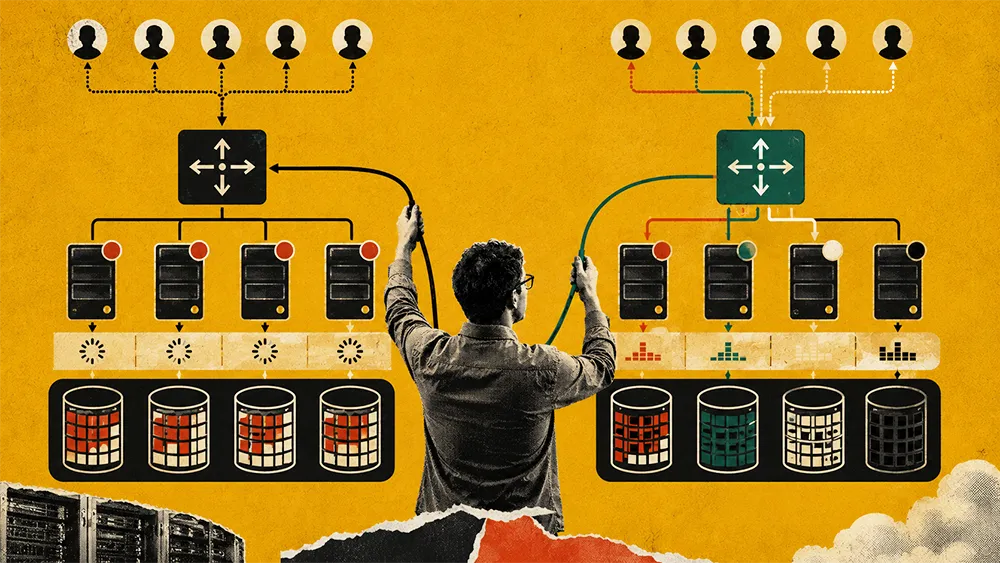
Once the inference server changes, the orchestration layer has to move with it, because routing systems today see compute availability and nothing about KV cache state. That turns routing into a data locality problem, sending each request to the instance that already holds the relevant cached prefixes, the same principle that sends a query to the replica already holding the data. The people who solve it will come from a different engineering background, the veterans of internet-scale data distribution rather than the model side.
"The team that wins in this space doesn't come from the model side of the house. It comes from someone who deeply understands storage systems, distributed systems, distributed caching," Nagireddy concludes. For infrastructure veterans who have built content delivery networks, managing the KV cache reads as a solved problem applied to a new kind of data. "That cross-domain insight is where the next architectural shift will come from.