
AI is Telling Engineers to Build the Database First and the Rest Can Follow
Grant Fritchey, Product Advocate at Redgate Software, explains why AI-assisted development is pushing enterprises back toward data-first architecture, where database design, governance, and senior engineering judgment decide whether faster code holds up.

Make AI Data Press one of your go-to sources on Google


The shocking thing was that it said, let's go build the database as the first step. That was a real surprise for me.

Grant Fritchey
Agents have gotten good enough at writing code that the interesting failures have moved. A team can stand up a working application without anyone on it understanding the schema underneath, the access patterns it assumes, or the security model it quietly dropped three commits back. The code runs fine. Whether it's still standing in a year comes down to database design, automated testing, and whether anyone is experienced enough to catch what the agent got wrong.
Grant Fritchey is a Product Advocate at Redgate Software, which builds database management and DevOps tooling for SQL Server and PostgreSQL. He's spent more than thirty years as a developer and DBA, is a Microsoft Data Platform MVP and AWS Community Builder, has written several books including SQL Server Query Performance Tuning, and is a past president of PASS. Two years of building with agents have convinced him the technology accelerates disciplined teams and quietly wrecks unprepared ones.
"The shocking thing was that it said, let's go build the database as the first step. That was a real surprise for me," Fritchey says.
Information moves back to the center
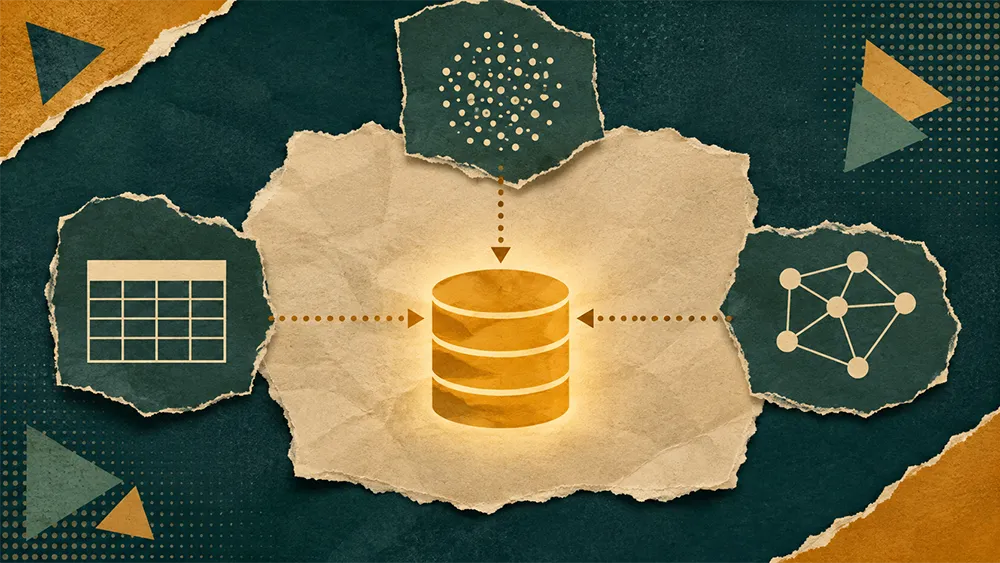
"Everybody wants to put AI on everything. But where does the AI derive its information? That, in short, is a database," he says. The result is a return to relational structures that predate the current wave by decades, mostly PostgreSQL in greenfield work.
"Love them or hate them, the relational math works," Fritchey says. "People forget Postgres is well over thirty years old. But because it's constantly refreshed, the extensibility turns it into a new platform every time you add something to it. That's why it's taken over the world." Information still has to be stored and retrieved efficiently, and connecting models to that data puts traditional infrastructure in the critical path.
Agents keep steering toward insecure code
What worries Fritchey has nothing to do with output quality. Across informal and heavily guardrailed projects alike, agents default to insecure implementations.
"They will migrate into bad security practice over and over again. I've used the Copilot agent quite a lot, and the Claude agent a whole bunch. Both have a real tendency to go into unsecure mechanisms, in the database and the code. It's a fight," he says.
The failure modes are not equivalent. "You introduce some bad code, it causes a bug. You introduce something that messes up data. All of that's recoverable," Fritchey says. "You introduce a security hole, and all of your data has been exposed to the internet. Now we have a real problem."
The genius junior developer problem
"It's the most capable genius junior developer I've ever seen. Just as I wouldn't let a junior DBA have unfettered access to production, I'm not letting my agent have unfettered access to production," says Fritchey. Teams already running automated testing and deterministic controls plug agents in and go, because whatever stops a reckless human stops an agent too. Teams pointing agents at production with SA privileges are the ones filing incident reports about dropped databases.
Inexperience compounds the problem. "You can grab one of these agents and start building, and you will produce functional code. It may not be good code, it may not scale, it probably won't be secure," Fritchey says. "You just won't be able to identify the technical debt. You won't see the trade-offs you're losing, because you don't have that knowledge."
That shortage shapes how he reads the hiring market. IT employment has held steady rather than contracted, consistent with AI acting as an accelerant on work that still needs senior review. "If I was in management, the main thing I'd be looking for is senior talent. You need that steadying hand, the master sergeant who's been in the war and seen the elephant."
Trust, then verify
None of this makes Fritchey a skeptic. Building a mapping application on AWS for a ham radio project, he described what he wanted and the agent proposed Lambda functions, which he'd never used. "I would have spun up a VM or done something more old school. It was a good choice, and something I wouldn't have thought of," he says. "These agents are grossly irresponsible, but they're not stupid. Is that a hallucination or not? You've got to be able to trust but verify."
One technique he recommends costs nothing: hand what one agent produced to a different model for review. "The agent just told me to do these things. What do you think? It will second-guess itself. Send Claude over to ChatGPT, ChatGPT over to Copilot. You can get better insight quick by pointing the code at another AI." The architecture fundamentals haven't changed, and neither has who gets the most from the tool. "The best person to use the hammer is the person who knows how a hammer works."