

OAuth is the gold standard for a secure framework, and data is never shared until an individual user explicitly grants the AI platform access. It's a consent-based model that keeps credentials out of the process entirely.
 Nate GruendemannProduct Manager @ Grasshopper Bank
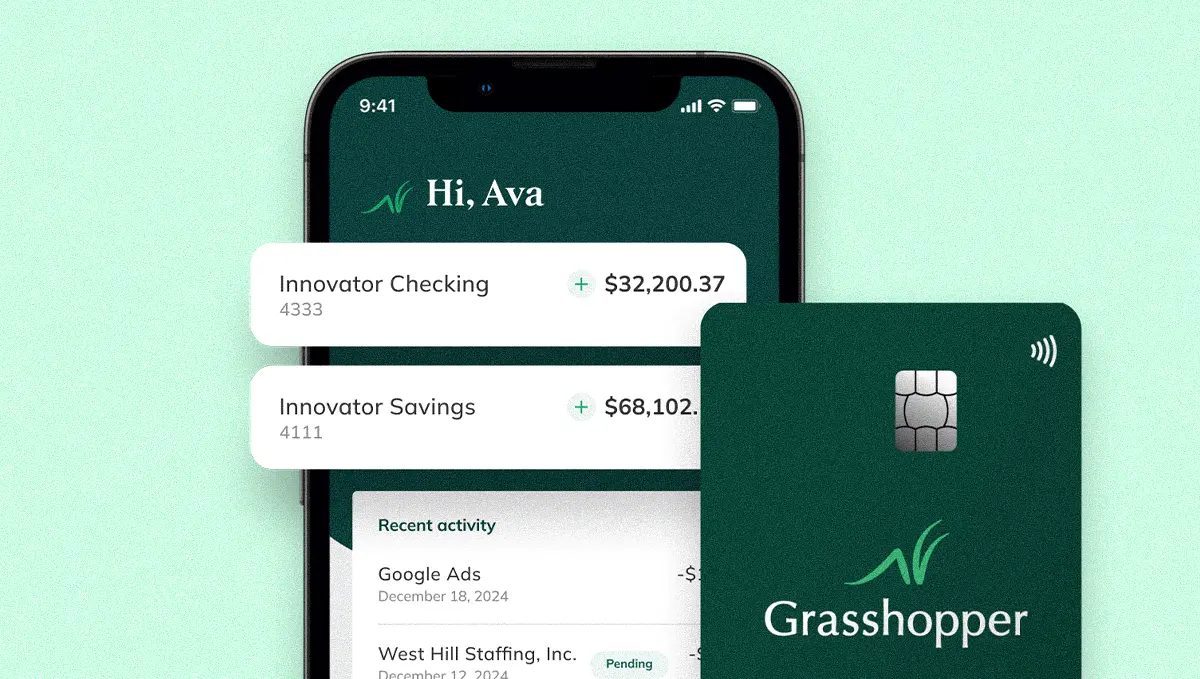
In an industry known for caution, Grasshopper Bank is making a decisive move, becoming one of the first U.S. banks to deliver a product built on the Model-Context Protocol. Just this month, the bank expanded its AI connector from only supporting Claude to now including ChatGPT, alongside an improved setup process using OAuth. The tool moves beyond typical bank chatbots, providing a secure, operational connection that allows business clients to pull their financial data directly into their preferred AI platform.
We spoke with a trio of experts whose partnership brings this innovation to life. Nate Gruendemann, a 2x VC-backed fintech founder and Product Manager at Grasshopper, leads the technology effort. He brought in two key voices from AI-native lending platform EnFi, one of Grasshopper Bank's leading clients. Chris Aronis, EnFi CRO, is a seasoned industry veteran, and Michelle Breitman Hipwood, EnFi CFO, works with the product every day. Together they've established a partnership where the bank provides the tool and EnFi demonstrates its real-world value.
"Our beta clients are asking Claude and ChatGPT questions like, 'Did my customer pay me yet?' or 'What's my average monthly burn rate and how much runway do I have left?' It is simple analysis, but it replaces a tedious and insecure upload process with a real-time connector," says Gruendemann.
The power of such a connection was demonstrated when, mid-conversation, Breitman Hipwood queried her AI to compare the interest she was earning across bank accounts. "It was instant," she says. "Before this, I would have had to log into two different accounts and dig for the numbers. Anything that lets me avoid that and just get the answer saves real time." The change reflects a growing trend of consumers and business leaders turning to AI for financial advice or information, proving the market is ready for a more integrated way to manage finances. "I’m in the product constantly, and when I’m doing analysis, I can just ask for my balance or check a specific charge. It keeps me moving instead of forcing me to log into multiple sites," Breitman Hipwood continues.
Two layers of trust: Grasshopper’s connector rests on a two-layered architecture of trust that aligns with a broader push in banking to strengthen cybersecurity as AI becomes more embedded in daily workflows. OAuth anchors the consumer side with a secure, consent-based flow, while enterprise partners like EnFi rely on client-controlled permissioning and strict data boundaries. "OAuth is the gold standard for a secure framework, and data is never shared until an individual user explicitly grants the AI platform access," Gruendemann says. "It's a consent-based model that keeps credentials out of the process entirely."
Client in control: On the enterprise side, the same principle applies but with even tighter control. Grasshopper lets each client define what an AI agent can access, and the bank builds the connector around those rules rather than its own. "We believe the decision should live with the client, not with us," Gruendemann continues. "They control access to the data, and we operate in concert with them."
As one of Grasshopper’s beta users, EnFi treats the AI connection as a supervised workflow rather than a free-floating automation layer. Their approach illustrates how the connector fits into a regulated back office without disrupting established controls.
The junior analyst: "You can think about AI as a junior analyst," Aronis says. "You give it work, but you check its output, and the more feedback you provide, the better it gets." He notes that their team builds review steps into every workflow so users can validate results directly against source documents. "It gives people confidence, and it keeps the learning process intact for analysts."
As for the road ahead, Gruendemann describes it as a deliberate, stepwise journey. Grasshopper’s roadmap begins with today’s read-only analysis and moves toward a future where clients can instruct their AI to act within clear safeguards. He expects adoption to follow a familiar pattern, shaped by the maturity of AI platforms, user comfort, and, in a regulated space, regulatory comfort. "This is a long game," Gruendemann concludes. "We will keep improving our capabilities so that when the market is ready, our products will be there."