

For highly regulated and compliant industries, it all comes down to one non-negotiable word: control. This isn't about resisting the cloud. It's about managing risk.
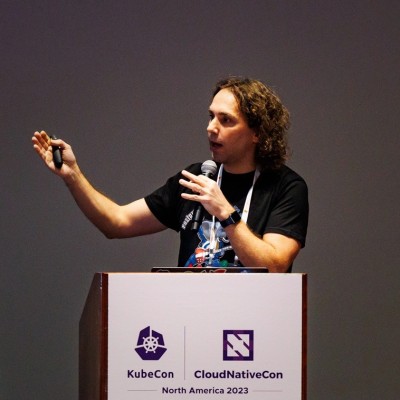 Gabriele BartoliniVP, Chief Architect, Kubernetes @ EDB
After years of "cloud-only" mandates, enterprise infrastructure strategy is shifting once again. For regulated industries in particular, the pressure to adopt is finally colliding with a more nuanced reality: modern leaders need more control, not greater dependency. Now, as organizations navigate compliance changes, geopolitical volatility, and the rising cost of running sensitive workloads in someone else's environment, the push toward public cloud has triggered a decisive return to on-premises strategies for many.
A recent conversation between EDB's CMO, Michael Gale, and Gabriele Bartolini, VP and Chief Architect, Kubernetes, offers a clear explanation for the sudden widespread resurgence. With more than two decades of experience in the PostgreSQL (Postgres) ecosystem, Bartolini cofounded 2ndQuadrant and CloudNativePG—the open-source operator now central to running Postgres in cloud-native environments. Today, he brings a practical, inside-the-stack perspective to the challenges regulated industries often face.
"For highly regulated and compliant industries, it all comes down to one non-negotiable word: control," Bartolini says. "This isn't about resisting the cloud. It's about managing risk. They need control over their infrastructure and for their digital assets."
For Bartolini, the demand for control is a rational response to a "VUCAP world"—one defined by volatility, uncertainty, complexity, ambiguity, and paradox. Even as geopolitical friction makes data location a national imperative, he explains, organizations must navigate a "regulatory gauntlet" that includes the GDPR, DORA, the NIS2 Directive, the Cyber Resilience Act, and the EU Data Act.
Breaking the trade-off: Striking the right balance has become a legal and operational requirement for data sovereignty, Bartolini explains. "Open source standards like Kubernetes and Postgres are revolutionary because they break this trade-off. They let organizations build a modern, cloud-native platform inside their own data center, allowing them to outperform the public cloud at a lower cost."
Without that control, teams risk being backed into a reactive posture, Bartolini continues. Forced decisions and accelerated deadlines often require organizations to re-engineer live systems while still serving customers.
A gilded cage: For leaders facing this pressure, Bartolini recommends a pragmatic remediation that centers on portability: use the managed Kubernetes services offered by major hyperscalers, but avoid the "gilded cage" of proprietary database-as-a-service solutions. "The initial temptation is to go to a DBaaS solution in the cloud, but that actually represents another vendor lock-in," he cautions. By running CloudNativePG on top of a managed Kubernetes service, however, teams get a clear path to hybrid or on-premises environments—without trading one form of dependency for another.
A good compromise: In the long term, the safest bet is technology that won't shift underneath you, Bartolini says. In his experience, the best security often comes from open-source software governed by the community. "When the community owns it, there’s no single vendor who can change the rules, alter the license, or limit where and how you run it," he explains. "That’s what protects organizations from getting trapped again."
The philosophy also embraces Gene Kim's and Steve Spears' concept of the "Winning Zone"—a state of controlled, low-risk execution enabled by a modern, open-source stack. Here, he outlines a Blue-Green migration in which a new "green" environment runs in parallel with the live "blue" system.
Practice makes perfect: When teams can practice and test without impacting customers, they can reclaim data sovereignty on their own terms. "They can test that the applications work, destroy the data, recreate it from scratch, and measure how long it takes to have all the data in the new setup," Bartolini says. "Once they're 100% confident, all they need to do is cut over."
Ultimately, economics are the driving force behind this return to on-premises strategies. With cloud costs often far higher than expected, unpredictable cloud bills have become a significant vulnerability, Bartolini concludes. But in an era of compute-intensive AI, the financial risk is particularly acute. Now, he says it's forcing many organizations to rethink their spending models entirely. To convert variable cloud OpEx into predictable CapEx, leading organizations are moving workloads on-premises.
By deploying Kubernetes closer to the hardware, organizations can reduce virtual machine overhead and gain faster access to storage and compute resources. "A very underestimated opportunity is the ability to run Kubernetes on bare metal, dedicating specific machines to Postgres with local disks. That way, you can treat that investment as a fixed cost spread over three or five years."